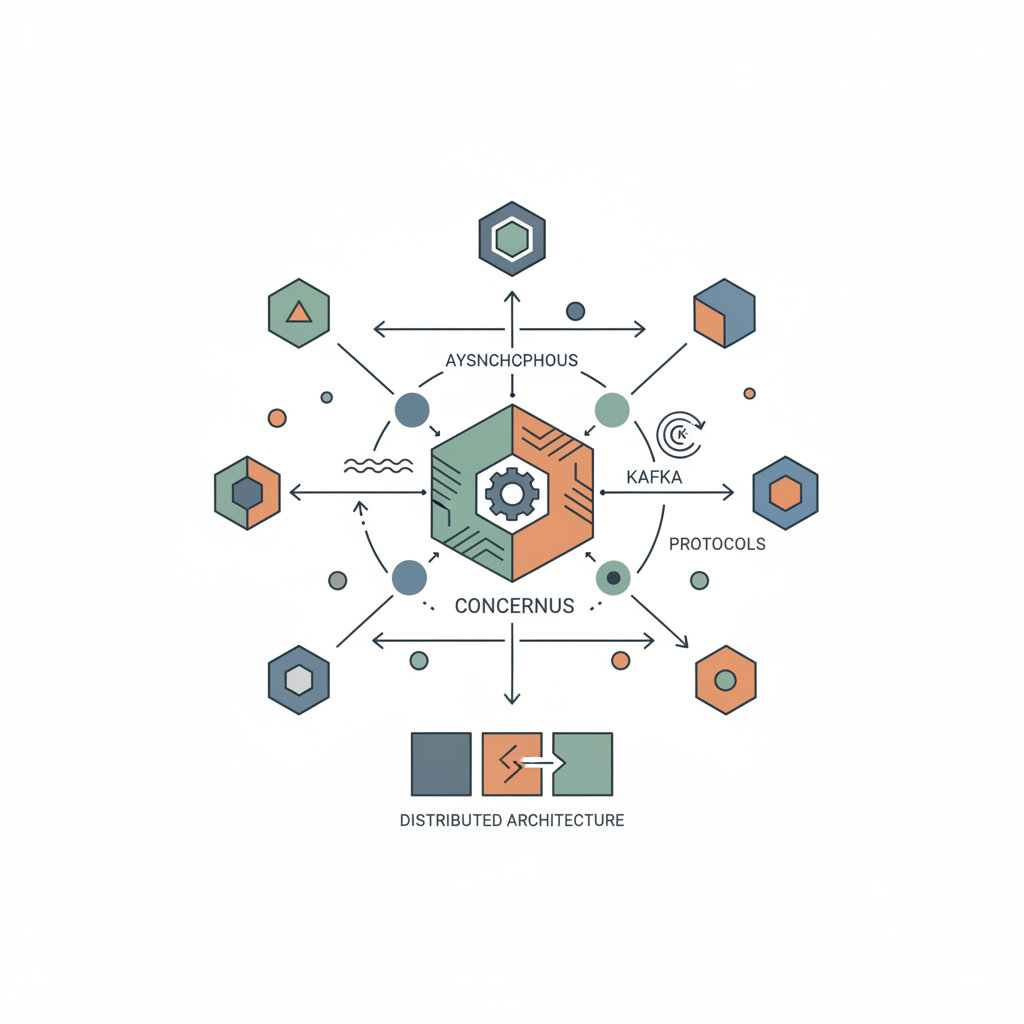
Architecting Asynchronous Consensus Protocols for Multi-Agent Decision Engines
An in‑depth look at designing and operating asynchronous consensus for multi‑agent decision engines, illustrated with Kafka, Raft, and Temporal patterns.
An in‑depth look at designing and operating asynchronous consensus for multi‑agent decision engines, illustrated with Kafka, Raft, and Temporal patterns.
Introduction The rapid proliferation of connected devices, the explosion of data, and the ever‑tightening latency requirements of modern applications have forced engineers to rethink the classic “cloud‑first” paradigm. Edge computing—processing data close to its source—offers the promise of sub‑millisecond response times, reduced bandwidth consumption, and heightened privacy. Yet, edge nodes alone cannot provide the massive compute, storage, and analytics capabilities that the cloud excels at. Enter autonomous AI agents: software entities that can make decisions, coordinate actions, and self‑optimize across heterogeneous environments without human intervention. By embedding these agents at both the edge and the cloud, organizations can achieve a truly synergistic architecture where workloads are dynamically placed, data is intelligently routed, and services adapt in real time to changing conditions. ...
Introduction In the era of micro‑services, real‑time analytics, and ever‑growing user traffic, latency is the most visible metric of a system’s health. A single millisecond saved per request can translate into millions of dollars in revenue for large‑scale internet businesses. Redis—an in‑memory data store that started as a simple key‑value cache—has evolved into a full‑featured platform for high‑performance distributed caching, message brokering, and real‑time data processing. This article walks you through the architectural considerations, design patterns, and practical implementation details needed to master Redis for building distributed caches and real‑time, horizontally scalable systems. By the end, you’ll understand: ...