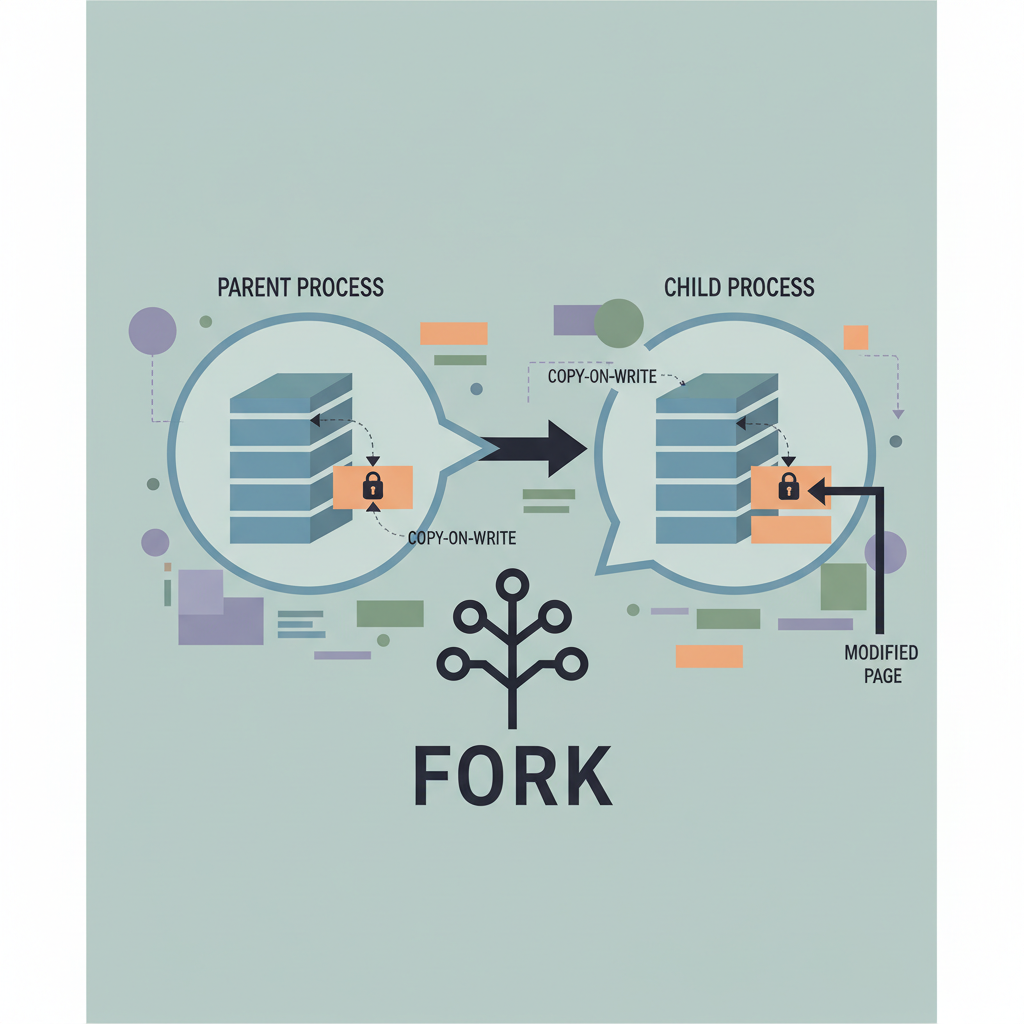
How Copy-on-Write Pages Prevent Fork from Exhausting Memory
A deep dive into the mechanics of copy‑on‑write pages and why they keep forked processes from blowing up system memory.
A deep dive into the mechanics of copy‑on‑write pages and why they keep forked processes from blowing up system memory.

Copy on Write lets forked processes share memory pages until they modify them, slashing RAM demand and keeping applications responsive.
Introduction Process creation is one of the core building blocks of any operating system. In Unix‑like environments, the fork() system call has become the canonical way to spawn a new process that is a near‑identical copy of its parent. Although the concept is simple—“duplicate the current process”—the underlying mechanics are surprisingly intricate, involving memory management tricks, file descriptor duplication, signal handling, and careful bookkeeping by the kernel. This article dives deep into how fork() works, covering everything from the high‑level philosophy behind process creation to the low‑level kernel steps that make it possible. We’ll explore practical C code examples, compare fork() with related system calls (vfork(), clone(), posix_spawn()), discuss performance and security implications, and finish with a checklist of common pitfalls and debugging techniques. ...