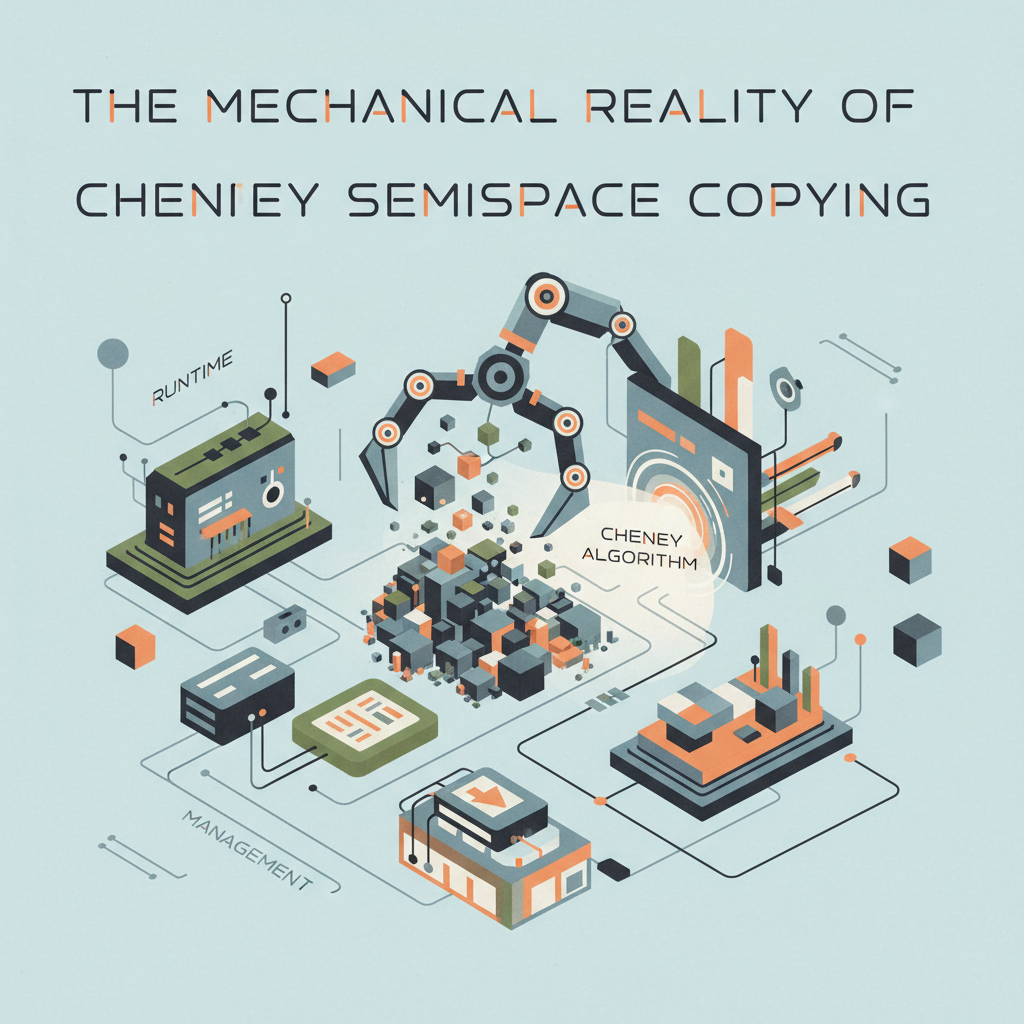
The Performance Cost of Garbage Collection in Rust WebAssembly Modules
A deep dive into the hidden performance costs of garbage collection in Rust‑compiled WebAssembly, with benchmarks, analysis, and mitigation tactics.
A deep dive into Go’s garbage collector, focusing on concurrency, performance tuning, and practical patterns for production services.
Copy‑on‑write can reduce memory copying but may increase GC pause times. This post explains why and how to mitigate the latency impact.
Table of Contents Introduction Why Memory Ordering Matters Defining Write Barriers Classification of Write Barriers 4.1 Store‑Store (Write‑After‑Write) Barriers 4.2 Store‑Load (Write‑After‑Read) Barriers 4.3 Full (Read‑Write) Barriers Real‑World Motivations 5.1 Garbage Collection 5.2 Transactional Memory 5.3 JIT‑Compiled Languages Implementation Strategies 6.1 Hardware Instructions 6.2 Compiler Intrinsics & Built‑ins 6.3 Language‑Level Abstractions Practical Examples 7.1 Java HotSpot Write Barrier 7.2 C++11 Atomic Fences 7.3 Rust’s atomic::fence Performance Considerations Testing, Debugging, and Verification Common Pitfalls & Best Practices Future Directions Conclusion Resources Introduction Modern software runs on increasingly complex hardware: multi‑core CPUs, deep cache hierarchies, out‑of‑order execution pipelines, and sophisticated memory subsystems. In such environments, visibility of memory writes is no longer guaranteed by simple program order. Compilers and CPUs are free to reorder instructions, cache lines, or even delay stores to improve throughput. ...
Python’s garbage collector (GC) automatically manages memory by reclaiming space from objects no longer in use, combining reference counting for immediate cleanup with a generational garbage collector to handle cyclic references efficiently.[1][2][6] This dual mechanism ensures reliable memory management without manual intervention, making Python suitable for large-scale applications. The Fundamentals: Reference Counting At its core, CPython—the standard Python implementation—uses reference counting. Every object maintains an internal count of references pointing to it.[1][5] ...