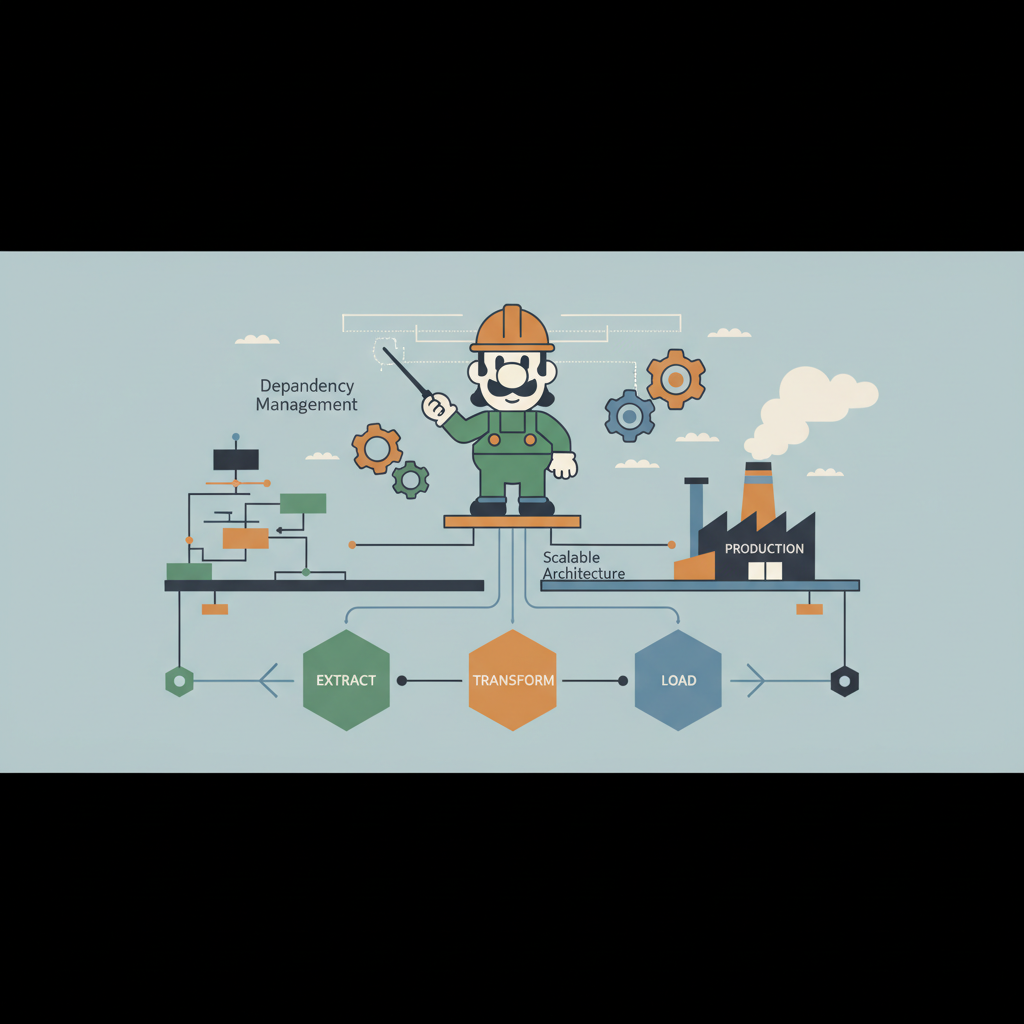
Edge AI Orchestration: Unlocking the Power of Distributed LLMs for Real‑Time Applications

Introduction Large language models (LLMs) have transformed natural‑language processing, enabling everything from sophisticated chatbots to code generation. Yet the majority of LLM deployments still live in massive data‑center clusters, far from the devices that generate the data they need to act upon. For real‑time applications—autonomous drones, augmented‑reality (AR) glasses, industrial robots, and on‑premise customer‑service kiosks—latency, bandwidth, and privacy constraints make a purely cloud‑centric approach untenable. Edge AI orchestration is the emerging discipline that brings together three pillars: ...

March 21, 2026 · 12 min · 2514 words · martinuke0

Unlocking Real-Time AI: Advanced Orchestration for Distributed Autonomous Agents

Introduction Artificial intelligence has moved far beyond batch‑trained models that run on a single server. Modern AI‑enabled applications often consist of hundreds or thousands of autonomous agents—robots, drones, edge devices, micro‑services—working together to solve complex, time‑critical problems. Whether it is a fleet of warehouse robots routing pallets, a swarm of delivery drones navigating urban airspace, or a distributed sensor network performing real‑time anomaly detection, the orchestration layer that coordinates these agents becomes the decisive factor between success and failure. ...

March 21, 2026 · 12 min · 2433 words · martinuke0

Architecting Decentralized Autonomous Agents with Confidential Computing and Verifiable Multi‑agent Orchestration

Table of Contents Introduction Fundamental Concepts 2.1 Confidential Computing Primer 2.2 Decentralized Autonomous Agents (DAAs) 2.3 Verifiable Multi‑agent Orchestration Architectural Principles System Design 4.1 Trusted Execution Environments (TEEs) 4.2 Agent Runtime & Secure State Management 4.3 Orchestration Layer with Verifiable Computation 4.4 Secure Messaging & Identity Practical Example: A Confidential Supply‑Chain Agent Network 5.1 Scenario Overview 5.2 Implementation Blueprint (Rust + SGX) 5.3 Running the Orchestration Flow Challenges, Trade‑offs, and Future Directions Conclusion Resources Introduction The convergence of confidential computing, decentralized autonomous agents, and verifiable multi‑agent orchestration is reshaping how distributed systems handle sensitive data, trust, and coordination. Imagine a network of self‑governing software entities—agents—that can execute private business logic, exchange proofs of correct execution, and dynamically compose workflows without relying on a single trusted party. Such a system promises: ...

March 20, 2026 · 10 min · 2029 words · martinuke0

Beyond Chatbots: Mastering Agentic Workflows with Open-Source Small Language Model Orchestration

Table of Contents Introduction From Chatbots to Agentic Systems Why Small Open‑Source LLMs Matter Core Concepts of Agentic Orchestration 4.1 Agents, Tools, and Memory 4.2 Prompt Templates & Dynamic Planning Popular Open‑Source Orchestration Frameworks 5.1 LangChain 5.2 LlamaIndex (formerly GPT Index) 5.3 CrewAI 5.4 AutoGPT‑Lite (Community Fork) Designing an Agentic Workflow: A Step‑by‑Step Blueprint Practical Example: Automated Financial Report Generation 7.1 Problem Statement 7.2 Architecture Diagram (textual) 7.3 Code Walkthrough Best Practices & Common Pitfalls Scaling, Monitoring, and Security Considerations Future Directions for Agentic Orchestration Conclusion Resources Introduction The hype around large language models (LLMs) has largely been framed around conversational agents—chatbots that can answer questions, draft emails, or provide tutoring. While conversational UI is a compelling entry point, the real transformative power of LLMs lies in agentic workflows: autonomous pipelines that can plan, act, and iterate over complex tasks without continuous human supervision. ...

March 20, 2026 · 13 min · 2658 words · martinuke0

Orchestrating Distributed Vector Databases for High‑Throughput Multimodal Retrieval‑Augmented Generation

Introduction Retrieval‑augmented generation (RAG) has become a cornerstone of modern AI applications. By coupling large language models (LLMs) with external knowledge sources, RAG systems can produce more factual, up‑to‑date, and context‑aware outputs. When the knowledge source is multimodal—images, audio, video, and text—the underlying retrieval engine must handle high‑dimensional embeddings from multiple modalities, support massive throughput, and stay low‑latency even under heavy load. Enter distributed vector databases. These systems store embeddings as vectors, index them for similarity search, and expose APIs that let downstream models retrieve the most relevant items in milliseconds. However, a single node quickly becomes a bottleneck as data volume, query rate, and model size grow. Orchestrating a cluster of vector stores—with intelligent sharding, replication, load‑balancing, and observability—enables RAG pipelines that can serve millions of queries per day while supporting real‑time multimodal ingestion. ...

March 19, 2026 · 13 min · 2757 words · martinuke0
Feedback