Why Cheney Semispace Copying Prevents Heap Fragmentation
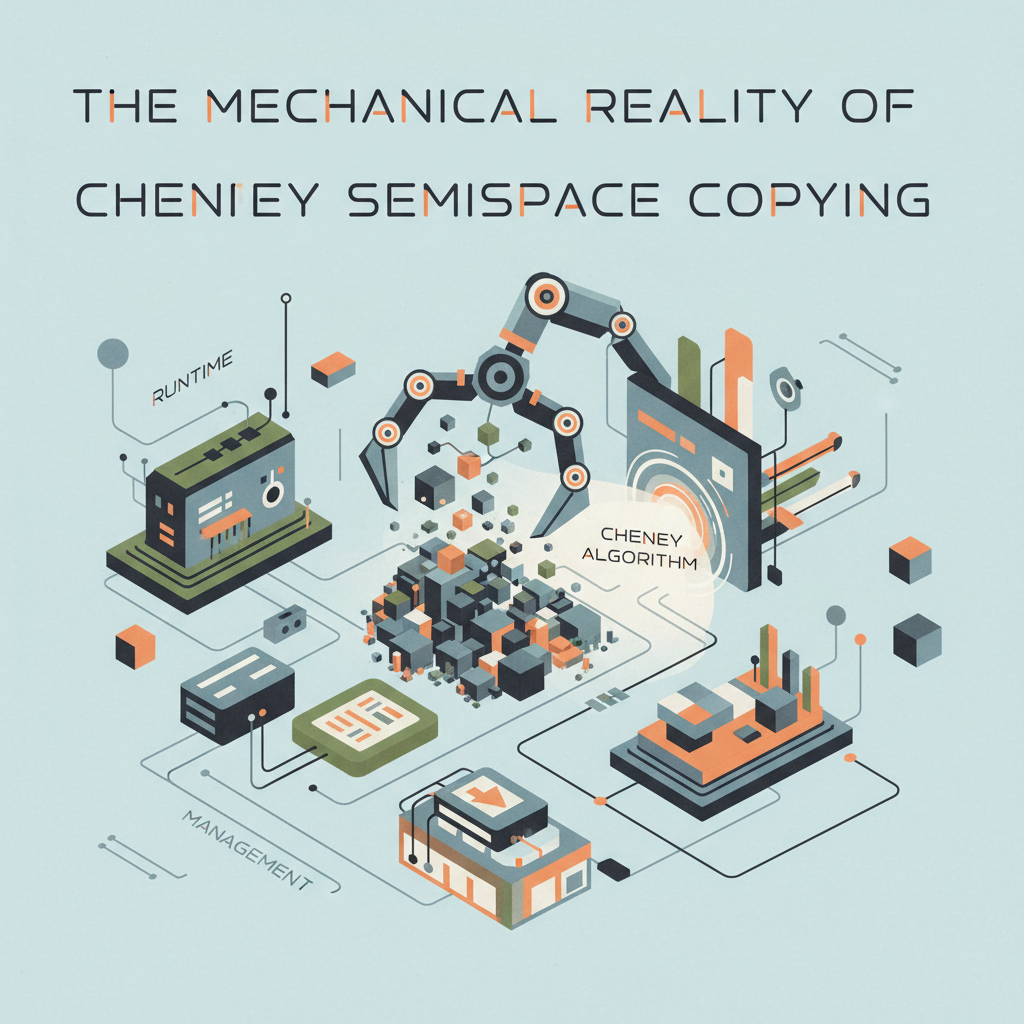
Explore why Cheney’s semispace copying algorithm inherently prevents heap fragmentation, how it works under the hood, and what trade‑offs developers should consider.

Discover how Cheney’s semispace copying algorithm works under the hood, why it matters for modern runtimes, and what pitfalls to avoid when implementing it.
A deep dive into Go’s scheduler, showing how goroutines are mapped to OS threads, how work stealing and preemption keep CPUs busy, and practical tips for tuning performance.
Explore why static type checkers fall short of ensuring runtime safety, the mechanisms that break static guarantees, and practical strategies to bridge the gap.
Table of Contents Introduction What Is Bun? 2.1 Historical Context 2.2 Core Design Goals Architecture Overview 3.1 The Zig Foundation 3.2 V8 Integration vs. Bun’s Own Engine 3.3 Bundler, Task Runner, and Package Manager Getting Started with Bun 4.1 Installation 4.2 “Hello, World!” in Bun Bun as a Runtime: API Compatibility 5.1 Node.js Compatibility Layer 5.2 Web APIs and Fetch Bun’s Built‑In Bundler 6.1 Why a Bundler Matters 6.2 Practical Example: Bundling a React App Package Management with bun install 7.1 Speed Comparisons 7.2 Workspaces and Monorepos Task Runner & Script Execution 8.1 Defining Scripts in bunfig.toml 8.2 Parallel Execution and Caching Performance Benchmarks 9.1 [Startup Time] 9.2 [Throughput & Latency] 9.3 [Real‑World Case Studies] When to Choose Bun Over Node/Deno Limitations and Gotchas Future Roadmap and Community Conclusion Resources Introduction JavaScript has long been the lingua franca of the web, but its ecosystem has evolved dramatically since the early days of Node.js. Developers now juggle runtimes, package managers, bundlers, and task runners—each with its own configuration files, version constraints, and performance quirks. Enter Bun, a newcomer that promises to collapse that fragmented toolchain into a single, ultra‑fast binary. ...